
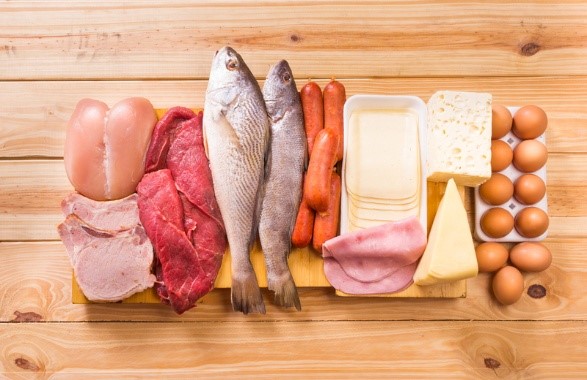
Protein is found throughout your body — in your muscles, bones, skin, hair and every other tissue. At least 10,000 different proteins make you who you are and keep you that way. Protein plays a fundamental role in promoting and sustaining overall health. Its functions range from growing and repairing muscle and tissue to bolstering immune function, regulating chemical reactions and transporting nutrients.
Determine Your Protein Needs
The average adult needs a minimum of 0.8 grams of protein for every kilogram of body weight per day, or just over 7 grams for every 20 pounds of body weight. For a 140-pound person, that’s about 50 grams of protein per day; a 200-pound person needs about 70 grams per day. Guidelines from the National Academy of Medicine state that acceptable daily protein intake ranges from 10% to 35% of total calories.
Factors such as age, activity level, health conditions and diet can affect protein needs. For example, a highly active individual who trains five times a week and weighs 175 pounds should consume at least 94.8 grams of protein daily.
Protein Differences
Protein is made from more than 20 types of amino acids, nine of which are considered essential. These essential amino acids must come from food because the body cannot produce them. Foods that contain all essential amino acids are considered complete proteins, while those lacking one or more are incomplete.
Animal-based foods — such as meat, poultry, fish, eggs and dairy — are complete protein sources. Plant-based proteins, including beans, vegetables and nuts, are incomplete protein sources. Regardless of your diet, it’s important to consume the proper amount of protein for your body.
Examples of protein-rich foods include:
| Animal-based Sources | Grams per Serving |
| Skinless chicken breast | 3 ounces = 28 grams |
| Pork | 3 ounces = 22 grams |
| Steak (lean cut) | 3 ounces = 26 grams |
| Large eggs | 6 grams |
| Dairy products (milk, yogurt, cheese) | 1 cup yogurt = 12 grams |
| Seafood (salmon, tuna, shrimp) | 4 ounces salmon = 27 grams |
| Vegan Sources | Grams per Serving |
| Soy (edamame, soy milk, tofu) | ½ cup tofu = 10 grams |
| Nuts (almonds, peanuts, walnuts) | 2 tablespoons almonds = 3 grams |
| Beans (lentils, chickpeas, black beans) | ½ cup black beans = 7 grams |
| Grains (spaghetti, rolled oats, quinoa) | ½ cup rolled oats = 7 grams |
| Veggies (spinach, potatoes, broccoli) | 1 cup cooked spinach = 5 grams |
| Seeds (sunflower, chia) | 1 ounce chia seeds = 4.7 grams |
Protein Supplementation
Protein powders, drinks and fortified foods are widely available. These may be helpful if you are not meeting your protein needs through diet, particularly for the elderly or those who are ill. However, protein deficiency is uncommon among healthy adults in the United States and other developed countries.
Keep in mind that protein powders are dietary supplements and are not regulated by the FDA. Always check labels for added sugars or preservatives. The best approach is to meet your protein needs through whole foods.
Protein is essential to a healthy diet, and the sources you choose matter. Aim for a variety of plant-based and animal proteins while limiting reliance on supplements. Use this guide to help meet your protein goals this week!
Most Commented